GUIDE 01 · LEGAL · 8 min
The legal guide to using fake money in music videos
The camera is allowed to see cash. The trouble starts when somebody treats the prop like money. This is the production version of that line, not a law-school memo.
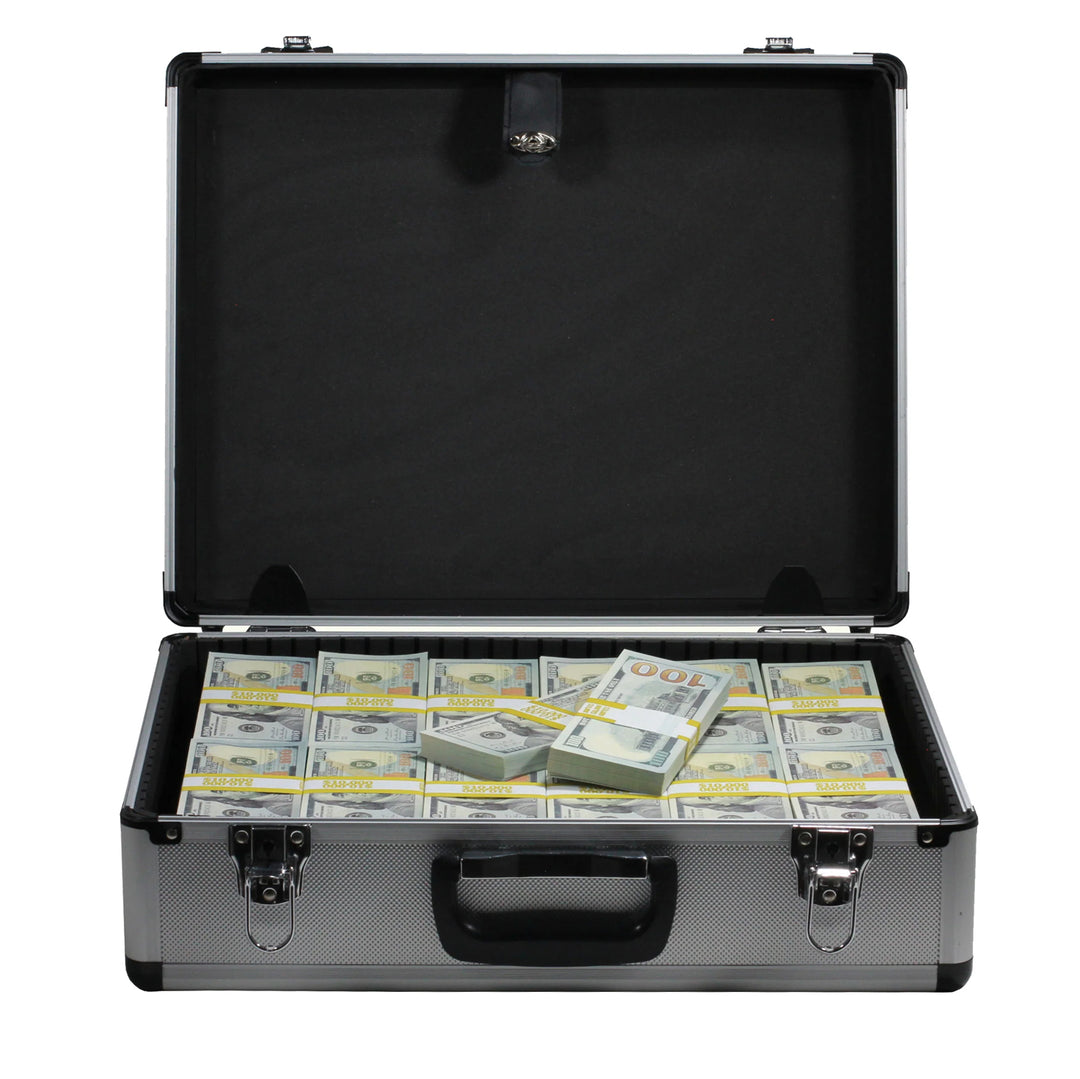
This is a field guide for directors, producers, and artists putting cash in a music video. It is not legal advice. Currency rules are federal, they are fact-specific, and a lawyer who knows your shoot is worth more than a blog post if the concept is weird.
Real bills on camera are not the problem
Filming genuine United States currency is legal. Movies do it constantly. The Secret Service’s problem is imitation: paper made to look like money, then used, passed, or good enough that a stranger could spend it. A music video that shows a stack is a normal shot. A music video that teaches a viewer the paper is spendable is a different project, and a worse one.
What the statute is actually policing
Counterfeiting and passing counterfeit currency are federal crimes. Separately, the rules for illustrating U.S. currency — the Counterfeit Detection Act of 1992 is the one production people cite — restrict color reproductions. The public version of that rule is blunt: a color illustration is generally supposed to be one-sided, and either under three-quarters or over one-and-a-half times the size of a real note, with the plates and files destroyed after final use. There is no permit office that stamps “approved prop.” Compliance lives in how the paper is manufactured and how the set controls it.
That is why homemade prints are a bad idea even when the concept is innocent. A prop house is in the business of making paper that reads as money to a lens and still fails as money to a bank. A desktop printer is in the business of matching whatever file you give it. If a bill is close enough to negotiate, the camera win is not worth the conversation with the Secret Service. The Rush Hour 2 props are the story the industry still tells: realistic paper left a set, entered circulation, and got seized.
Music videos have extra ways to get this wrong
A narrative film can lock a stage. A music video often cannot. Clubs, roofs, car meets, and crowd days are where straps walk off in a pocket. Extras do not experience a stack as a numbered asset. They experience it as a souvenir, or as a joke they try at a register on the way home. Both of those are how a closed set becomes a police report.
- Count every strap onto the set and count them off. One person owns the number. Not the artist, not the PA who is also wrangling cars.
- Do not hand stacks to a crowd, even for one chorus. Loose sheets for a throw are enough air. The bricks stay with a crew member who is not in the shot.
- Do not caption, title, or stitch the video as real cash anyone can spend, deposit, or receive as payment. The joke that gets clipped out of context is the joke that gets you a call.
- Tell every extra, in the release and out loud, that the paper is a prop, it leaves with the truck, and taking it is not a wrap gift.
- If a fan, a location owner, or a background player asks to “break” one, the answer is no. If someone asks you to break a hundred, it is the wrong hundred.
What to put in front of the lens
Buy the paper from a seller who is selling it as a prop, and treat it like a prop on the call sheet. Full-print straps belong on the faces the camera can see: the table in the booth, the brick an artist fans for one bar, the open case. Blank fillers give a stack its thickness. You do not need a room of hero bills to sell a room of money. You need the sheets turned toward the lens to be the real-looking ones, and you need every sheet to go home in the same road case.
Skip any product that advertises itself as identical to genuine currency, spendable, or ATM-safe. That pitch is the opposite of a film prop. On the day, keep the straps banded until the shot that needs them loose, and restack them before the next setup. A fanned pile on a sticky club table is how you lose count.
A one-page version for the call sheet
- Prop only. Not legal tender. Not a payment, not a prize, not a wrap gift.
- Number of straps in, number of straps out, one name on the line.
- Hero print on camera faces. Filler inside the brick.
- No homemade bills. No “let’s see if the club takes it.”
- If the concept requires a character to spend it, change the concept.
The video can look expensive. The paper cannot leave looking negotiable. That is the whole legal guide that fits on a call sheet.
Not legal advice. Prop money is for film, television, photography, training, and media. It is not legal tender.